
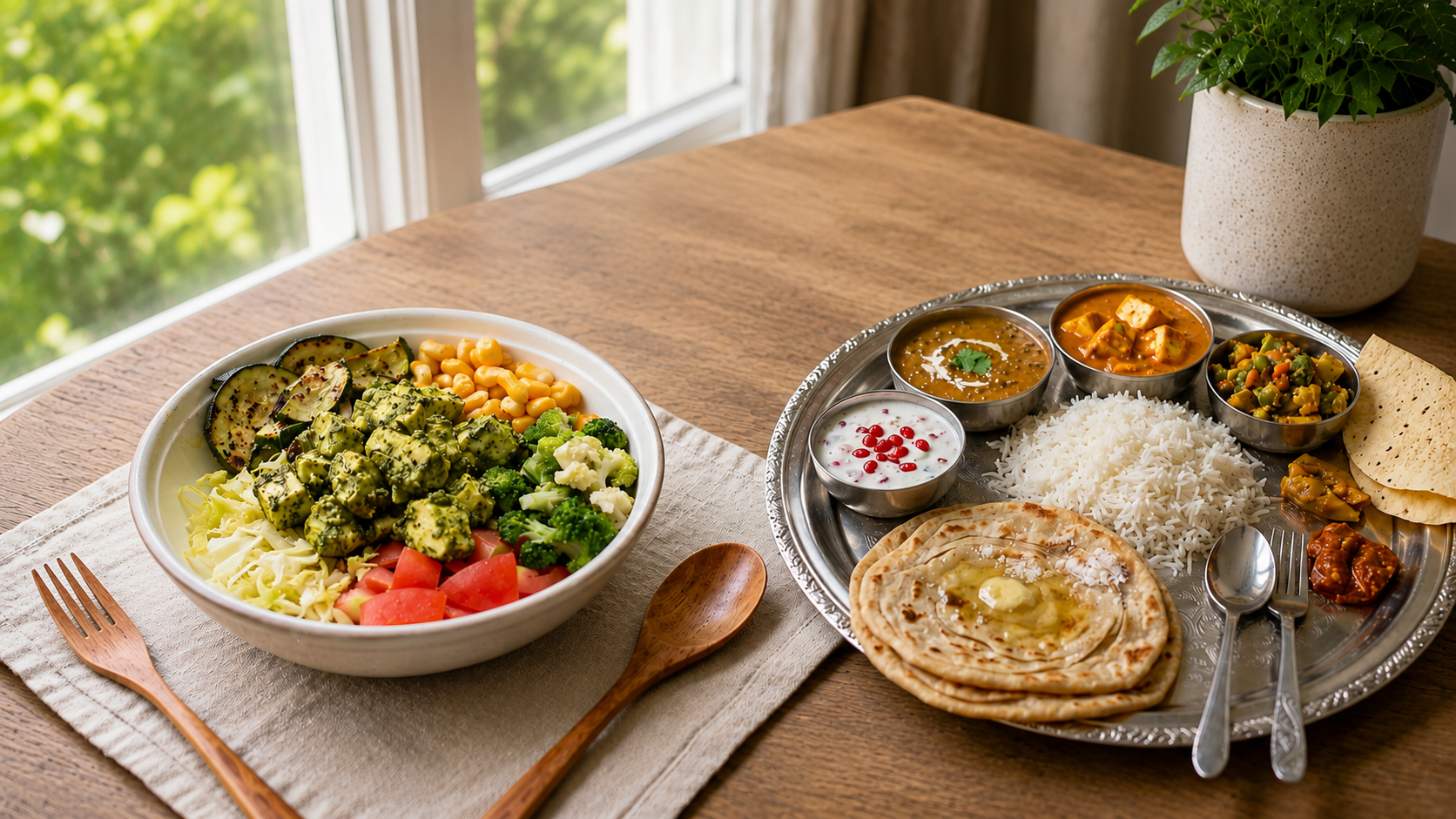
Salads have an image problem in India, seen as a side dish, a diet food, or something you eat when you're "being good" rather than actually hungry. That reputation is mostly earned, because most salads people encounter genuinely are an afterthought: a few slices of cucumber and tomato, maybe some onion, sitting next to the real meal.
A properly built high-protein salad bowl is a different category of food entirely, and understanding why changes how you should think about it.
The need: a filling meal that doesn't weigh you down
The specific problem a good salad bowl solves is satiety without heaviness. A lot of Indian meals, particularly lunch, are built around rice or refined-flour bread in large portions, which fills you up but often leaves you sluggish an hour later, the classic post-lunch energy dip that hits offices across the country by 3 PM. A high-protein salad bowl targets the same goal, genuine fullness, through a completely different mechanism, one that doesn't come with the same energy crash.
Why it matters: protein and volume, not just "vegetables"
The reason a real salad bowl can rival or beat a heavier meal for satiety comes down to two factors working together:
- Protein is the most satiating macronutrient: Gram for gram, protein triggers stronger and longer-lasting fullness signals than carbohydrates or fat. A salad with a genuine protein source, whether paneer, tofu, lentils, chickpeas, or sprouts, isn't just "healthier." It's mechanically more filling than a plain vegetable side ever could be.
- Volume matters for how full you feel, not just calories: Vegetables and leafy greens are high in water and fiber, which means you're eating a large physical volume of food relative to the calories it contains. Your stomach's fullness signals respond to volume and stretch, not just calorie count, which is why a big bowl of a low-calorie-density salad with protein can feel more satisfying than a smaller portion of a calorie-dense meal.
4 Pillars of a Real Meal Salad Bowl
1. Protein as the Anchor
Paneer, sprouts, lentils or chickpeas make up a substantial portion of the bowl.
2. Include Healthy Fats
Nuts, seeds, and olive oil dressing slow digestion and boost vitamin absorption.
3. Watch Dressing Calories
Light vinaigrettes prevent quiet calorie accumulation while adding fresh flavor.
4. Complex Carbs Balance
Quinoa, chickpea, or whole grain additions complete a full meal replacement.
How to actually consume it well
A handful of habits separate a real meal-replacement salad from a sad desk lunch: making protein the anchor, not a garnish; not fearing healthy fats like nuts and seeds; watching high-calorie creamy dressings; and including complex carbs if it's your main meal.
How it's different from a typical heavy Indian meal
A standard Indian thali or full meal is often built around a large starch portion, whether rice or multiple rotis, with vegetables, dal, and curd as accompaniments rather than the centerpiece. It's a format optimized for taste and tradition, but the sheer starch volume is often what drives both the calorie count and the post-meal drowsiness.
A high-protein salad bowl inverts that structure: vegetables and protein take center stage, carbohydrates are present but modest, and the result is a meal that's often equally or more filling, at a meaningfully lower calorie and glycemic load. This isn't an argument that rice and roti are "bad." It's that a salad bowl offers a genuinely different, useful profile for the days your body needs fullness without the heaviness.
How it works in the body
A high-protein, high-fiber salad digests more slowly than a starch-heavy meal, despite feeling lighter. The combination of protein and fiber blunts the blood sugar response, meaning there's no sharp glucose spike and, critically, no sharp crash afterward. This is the biological reason people report feeling clear-headed and energetic after a well-built salad meal, rather than sleepy. The body isn't diverting resources into managing a glucose surge.
The Kinnow difference
Kinnow's high-protein salad bowls are built around this exact principle: a genuine protein anchor (paneer, sprouts, lentils, chickpeas), meaningful vegetable volume, and dressings that add flavor without quietly turning the bowl into a calorie trap. Everything is 100% vegetarian and made from natural, clean ingredients, so the protein sources are real food, not processed substitutes.
"Because we control our own kitchens and delivery fleet, your bowl isn't assembled hours ahead and left waiting in a warehouse. Our 20-minute freshness promise means it's built close to your order, with vegetables that are crisp, not wilted."
And the full nutrition breakdown, protein, fiber, and calories, is visible in the app, so you know exactly what you're eating before you order it.
A salad bowl isn't a compromise meal. Built right, it can genuinely out-perform a heavier, traditional plate, and it's one of the easiest ways to eat lighter without eating less. When it's Kinnow, that "built right" part is already handled. It's already been filtered for your health, bowl after bowl.