
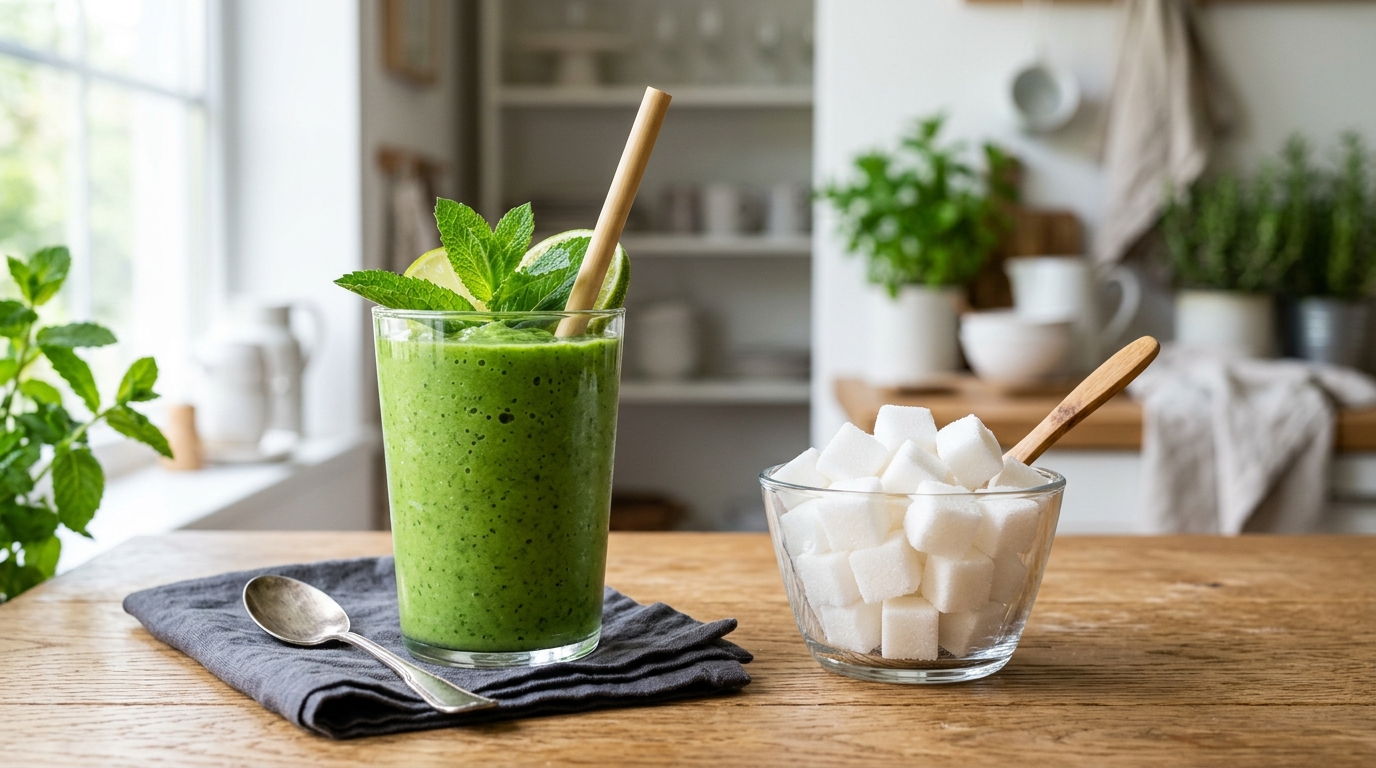
Smoothies have a branding problem. Somewhere between the health food aisle and the juice bar, "smoothie" started meaning two very different things: a genuinely balanced, fiber-rich meal in a glass, or a blended dessert with fruit as an alibi. Both look identical in a cup. Only one of them actually helps your morning.
Here's how to tell them apart, and why the difference matters more than most people realize.
The need: why mornings suit a smoothie better than most meals
A smoothie solves a very specific problem, the same one we've talked about across Bangalore's rushed mornings: there often isn't time to sit down and eat a full plate, but your body still needs real fuel before you start the day. A well-made smoothie is one of the few breakfast formats that can deliver protein, fiber, healthy fat, and micronutrients in something you can drink in five minutes, sometimes on the way out the door.
That's the appeal. It's also exactly why smoothies get abused. "Drinkable" and "fast" make it easy to load a cup with fruit, honey, and flavored yogurt and call it health food, when it's functionally a milkshake with better marketing.
Why it matters: the mechanism, not just the ingredients
The nutritional value of a smoothie comes down to three things working together, not any single "superfood" ingredient:
- Fiber slows down sugar absorption: When you eat a whole fruit, the fiber in its structure slows down how fast your body absorbs the natural sugar inside it. Blending breaks down that structure, not entirely, but enough that a smoothie digests faster than the same fruit eaten whole. This is why a smoothie built only from fruit and juice can spike blood sugar surprisingly fast, even though "it's just fruit."
- Protein and fat blunt the glucose response: Adding a protein source (curd, paneer, soaked nuts, seeds) and a source of healthy fat (nut butter, flax, chia) slows digestion significantly, flattening the blood sugar curve and making the smoothie genuinely filling rather than a 45-minute sugar high followed by a crash.
- Volume and water content affect satiety: A smoothie built with vegetables (spinach, cucumber) or whole ingredients rather than concentrated fruit juice tends to be more filling per calorie, because you're getting fiber and water bulk instead of just sugar concentration.
4 Practical Rules of a Real Meal Smoothie
1. Whole Fruit Over Juice
Juice strips the fiber that slows sugar absorption in the first place.
2. Protein is Mandatory
Curd, paneer, soaked nuts or seeds turn a drink into a filling meal.
3. Watch Sweetener Stacking
Fruit + honey + flavored yogurt + sweetened granola adds up fast.
4. Replace, Don't Add
Treat a smoothie as the meal itself, not a side dish alongside breakfast.
How it's different from a typical heavy Indian breakfast
A traditional Indian breakfast, whether poha, paratha, or idli-vada, tends to be carbohydrate-dense and cooked, often with added oil or ghee, and eaten fairly quickly without much chewing resistance. A well-built smoothie flips that profile: it's nutrient-dense rather than calorie-dense, delivers a meaningful vegetable or fruit serving most people don't otherwise get before noon, and requires no cooking, which matters on a morning with no time to spare.
The trade-off is texture and habit, not nutrition. Some people miss the ritual of a hot, cooked meal, which is a legitimate preference. A smoothie isn't meant to replace every breakfast forever, just to be a genuinely solid option on the mornings that need one.
How it works in the body
A properly balanced smoothie, with a fruit or vegetable base, protein source, healthy fat, and minimal added sugar, typically starts digesting within 20-30 minutes, faster than a heavier cooked meal, but the protein and fat content slow that process down enough to provide steady energy for 3-4 hours rather than a quick spike and crash. The fiber content also supports gut motility, which matters more than most people realize for how you feel by mid-morning. Sluggish digestion is a common, under-discussed contributor to that "heavy" feeling people blame on being tired.
The Kinnow difference
Every smoothie on Kinnow is built around this exact framework: real fruits, zero added sugar, a genuine protein source, and a deliberate fiber and fat balance, not a fruit-and-sugar shortcut dressed up as health food. We're 100% vegetarian across the board, so every protein addition comes from natural, clean, plant-based or dairy sources, with no shortcuts and nothing artificial propping up the nutrition numbers.
"Because we run our own kitchens and control the entire process end-to-end, nothing is blended hours in advance and left sitting. With our 20-minute freshness promise, your smoothie is made close to your order."
And the full ingredient and nutrition breakdown is visible in the app before you order, so you're never guessing whether what you're drinking is a real meal or a dessert in disguise.
A smoothie can genuinely elevate your morning, but only when it's built like a meal, not marketed like one. When it's Kinnow, that check has already been done for you. It's already been filtered for your health, so you can just drink it and go.