
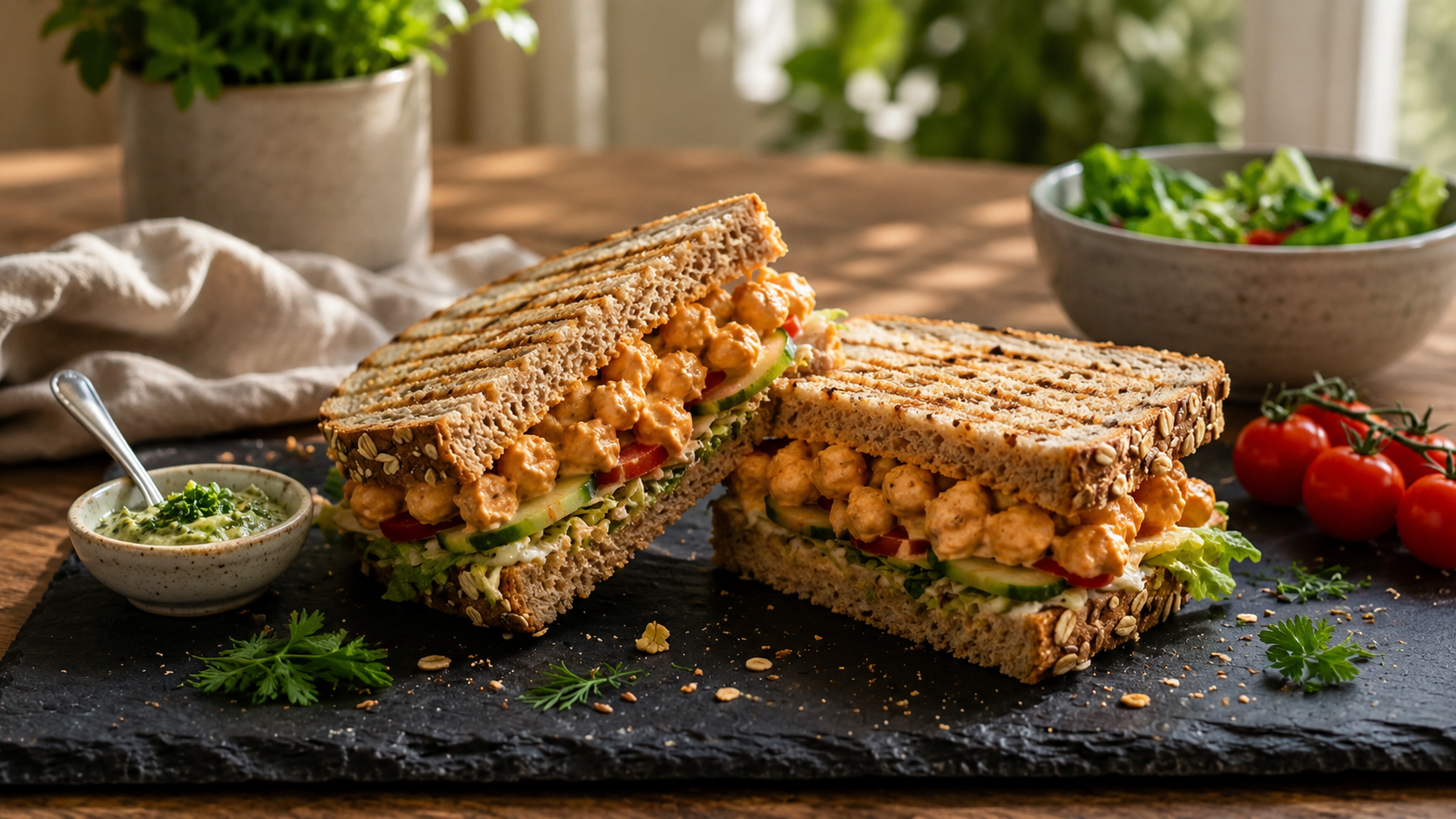
The sandwich has an unfair reputation problem in health-conscious circles, lumped in with white bread, mayonnaise, and processed cheese, as if "sandwich" is inherently the opposite of healthy eating. It isn't. The bread you build it on and the way your body responds to it are two completely different questions, and most people have never actually been told the difference.
Here's what glycemic index has to do with your lunch, and how a sandwich can go from a blood-sugar problem to a genuinely smart meal.
The need: a fast, portable meal that doesn't betray you an hour later
Sandwiches solve an obvious problem. They're portable, require no utensils, and fit into a workday with back-to-back meetings in a way a plated meal often can't. The issue isn't the format, it's that the default version, white bread, refined fillings, minimal fiber, digests fast, spikes blood sugar, and leaves you hungry again well before your next meal is due. A low-GI sandwich keeps the convenience while fixing exactly that problem.
Why it matters: what glycemic index actually measures
Glycemic index (GI) measures how quickly a food raises your blood sugar after eating it, on a scale referenced against pure glucose. Foods are generally grouped as high, medium, or low GI, and the difference matters more than most people realize:
- High-GI foods cause a fast spike and an equally fast crash: White bread, refined flour, and many processed fillings digest quickly, flooding your bloodstream with glucose. Your body responds with a burst of insulin to bring levels back down, and that correction often overshoots, leaving you with a blood sugar dip that shows up as fatigue, irritability, or sudden hunger.
- Low-GI foods release glucose gradually: Whole wheat, especially minimally processed varieties, contains more fiber and a different starch structure than refined flour, which slows digestion. The result is a flatter, more gradual blood sugar curve: steadier energy, and importantly, a longer stretch before you're hungry again.
- Fiber is doing most of the work: The difference between white and whole wheat bread isn't really about "brown vs. white" as a color. It's about how much of the grain's natural fiber and structure survived processing. More intact fiber means slower digestion, which is the entire mechanism behind the low-GI benefit.
4 Decisions for a Low-GI Sandwich
1. Verify Whole Wheat First
Ensure whole wheat is the primary ingredient, not just brown caramel coloring.
2. Anchor with Protein & Fiber
Paneer, hummus, or lentil spreads slow down digestion significantly.
3. Light Spreads Only
Swap heavy mayonnaise for hummus, mustard, or yogurt-based dressings.
4. Mind Bread-to-Filling Ratio
Balance bread slices with substantial vegetable and protein volume.
How to actually consume it well
A few decisions determine whether a sandwich helps or works against you: checking that "whole wheat" actually means whole wheat; building in protein and fiber, not just carbs; going easy on high-calorie spreads; and minding the portion of bread relative to filling.
How it's different from a typical heavy Indian meal
Many traditional Indian meals lean on refined-flour breads, whether maida-based parathas, bakery bread, or large portions of white rice, which sit at the higher end of the glycemic spectrum, particularly when cooked in extra oil or ghee. A well-built whole wheat, low-GI sandwich offers a genuinely different profile: comparable convenience, but a slower, steadier digestion curve and typically better fiber content per calorie.
This isn't a case against Indian breads broadly. A chapati made from whole wheat atta is itself a reasonably low-GI option. It's more that "sandwich" doesn't have to mean the refined, fast-digesting version most people default to. The healthier version exists, it's just less common by default.
How it works in the body
After eating a whole wheat, protein-and-fiber-forward sandwich, digestion happens more gradually than with a refined-flour version. Blood glucose rises steadily rather than spiking, insulin release is more measured, and the resulting energy availability lasts longer, generally supporting 3-4 hours of steady focus rather than a quick high followed by a slump. This is particularly relevant for a midday meal eaten right before an afternoon of work, where a blood sugar crash translates directly into lost focus and productivity.
The Kinnow difference
Kinnow's sandwiches are built specifically around this principle: genuine whole wheat bread, real protein and fiber-rich fillings, and dressings that add flavor without turning the sandwich into a sugar or fat trap. Every ingredient is 100% vegetarian, natural, and clean, with nothing processed standing in for real food.
"Because we run our own kitchens and delivery fleet without third-party handoffs, your sandwich isn't pre-assembled and sitting for hours before it reaches you. Our 20-minute freshness promise means the bread is genuinely fresh."
And the full nutrition and ingredient breakdown is available in the app, so "whole wheat" is something you can actually verify, not just take our word for.
A sandwich doesn't have to be a blood-sugar liability. Built the right way, it's one of the most convenient, genuinely steady meals you can eat on a busy day. When it's Kinnow, it's already been filtered for your health, so "convenient" and "genuinely healthy" don't have to be a trade-off anymore.