
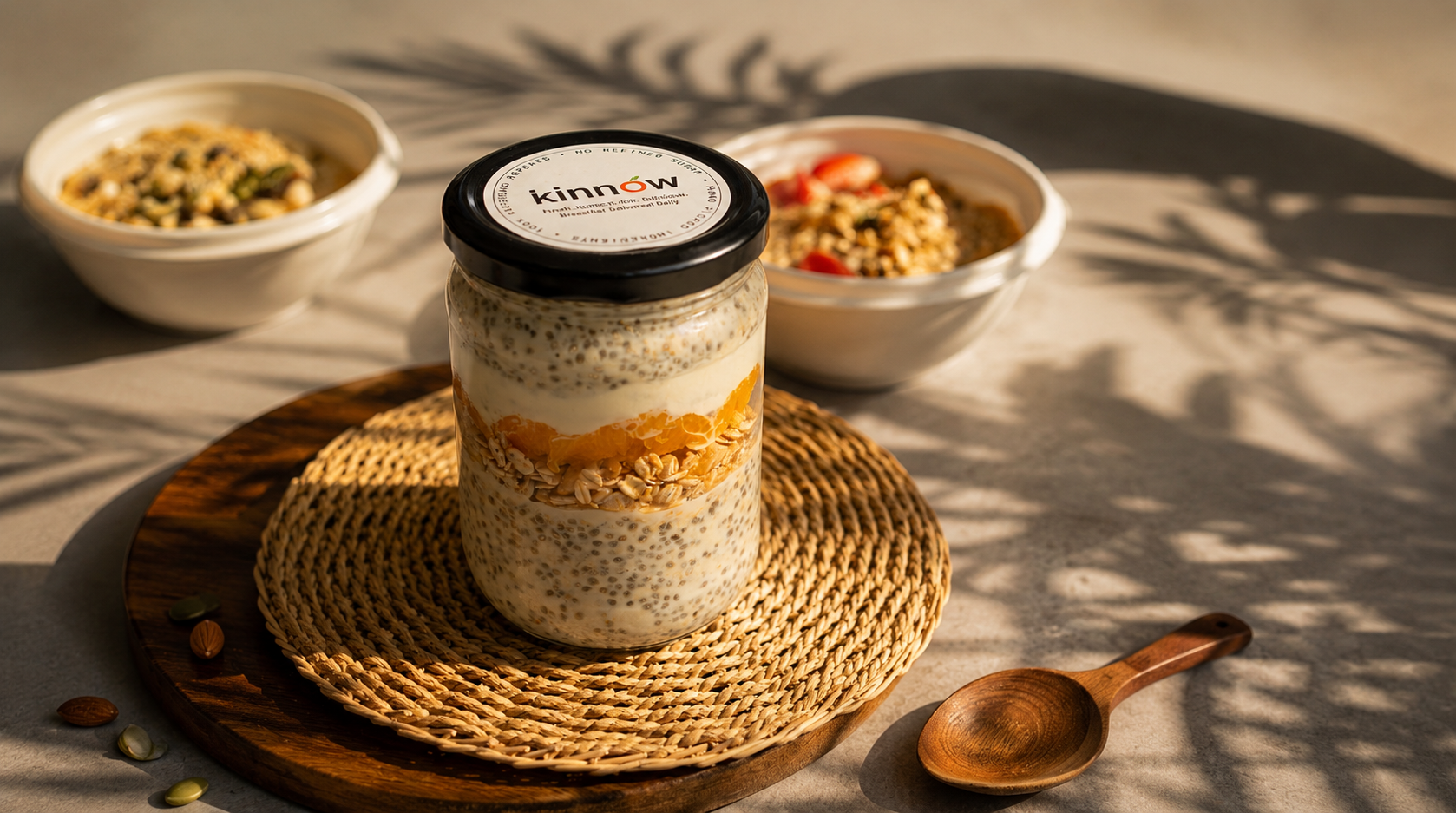
Chia seeds have the unusual distinction of being simultaneously overhyped and genuinely underrated: overhyped by wellness marketing that slaps "superfood" on anything with a health halo, and underrated by everyone who's tried them once, found them bland, and never learned what they're actually capable of when prepared properly.
Chia pudding, done right, is one of the few breakfast or snack formats that requires zero cooking and still delivers a genuinely dense nutritional profile. Here's why it works, and how to make sure yours is doing what it should.
The need: nutrient density with almost no effort
Chia pudding solves a specific problem: getting meaningful fiber, protein, and omega-3 content into your day without any cooking, any heat, or any real prep skill. You mix seeds with a liquid the night before, and by morning it's ready. For anyone whose mornings don't allow for stovetop cooking, which, per our earlier piece on Bangalore's rushed mornings, is most people in this city on most days, that's a genuinely rare combination of convenience and nutritional value.
Why it matters: what's actually happening inside those seeds
Chia seeds pack a disproportionate amount of nutrition into a small volume, and the mechanism is worth understanding rather than just accepting on faith:
- Soluble fiber creates the pudding texture, and does real digestive work: When chia seeds meet liquid, they absorb roughly ten times their weight, forming a gel. That gel isn't just texture, it's soluble fiber, which slows digestion, supports steady blood sugar, and feeds beneficial gut bacteria, similar to the mechanism in oats but even more concentrated.
- They're one of the better plant sources of omega-3 fatty acids: Chia seeds contain alpha-linolenic acid (ALA), a plant-based omega-3 that supports heart and brain health. It's not a complete substitute for the omega-3s found in fish, but for a fully vegetarian diet, it's a meaningful and rare source.
- Protein and minerals round out the profile: Chia seeds contribute a modest but real amount of protein, along with calcium, magnesium, and iron, a combination that's unusual for something classified as a "seed" rather than a legume or grain.
4 Rules for Real Chia Pudding
1. Zero Refined Sweeteners
Avoid heavy syrups or honey stacking that quietly undoes the low-sugar benefit.
2. Protein Liquid Base
Use curd, milk, or fortified plant milk rather than plain water or fruit juice.
3. Allow Overnight Setting
Give seeds time to absorb liquid fully to create a smooth, digestible fiber gel.
4. Pair with Whole Fruit
Fresh berries or fruit add natural vitamins without a refined sugar hit.
How to actually consume it well
Chia pudding is simple, but a few details determine whether it's a nutritional win or a sugar delivery vehicle: not oversweetening to compensate for blandness; using a protein-contributing liquid base; letting it set properly overnight; and pairing with fruit for micronutrients, not just sweetness.
How it's different from a typical heavy Indian breakfast or snack
Most traditional Indian breakfast and snack options are either cooked and carbohydrate-heavy (paratha, poha) or fried (vada, samosa as a mid-morning snack). Chia pudding sits in an almost entirely different category: no cooking, no oil, minimal carbohydrate load, and a fat and fiber profile that's unusual for Indian breakfast or snacking traditions. It won't replace a full meal for everyone, but as a light breakfast, a pre-workout snack, or a between-meals option, it fills a genuine gap that heavier, cooked options can't: something nutrient-dense that doesn't leave you feeling weighed down.
How it works in the body
Once eaten, the fiber gel that chia seeds form continues to slow digestion in your stomach and intestines, contributing to sustained fullness over several hours rather than a quick in-and-out digestion cycle. The soluble fiber also has a modest but real effect on slowing sugar absorption from anything else eaten alongside it, which is part of why chia pudding paired with fruit tends to cause a gentler blood sugar response than fruit alone. The omega-3 content, meanwhile, isn't something you feel immediately. Its benefits are cumulative, supporting long-term heart and cognitive health rather than an instant effect.
The Kinnow difference
Kinnow's chia puddings are built to actually deliver on the seed's potential: a properly set base, a protein-contributing liquid, and controlled natural sweetness from real fruit rather than syrup. Everything is 100% vegetarian and made from clean, natural ingredients, with nothing artificial standing in for flavor the way over-sweetening often does elsewhere.
"Because we prepare everything fresh in our own kitchens rather than batching and storing, and deliver through our own fleet under our 20-minute freshness promise, your chia pudding hasn't been sitting in a container for a day."
And as with everything on the platform, the full ingredient and nutrition breakdown is visible in the app, so you know exactly how much fiber, protein, and natural sugar you're actually getting.
A small seed doing this much nutritional work, with zero cooking required, is about as close as breakfast gets to genuinely effortless health, as long as it's made the right way. With Kinnow, it already is: when it's Kinnow, it's already been filtered for your health, no guesswork required.