
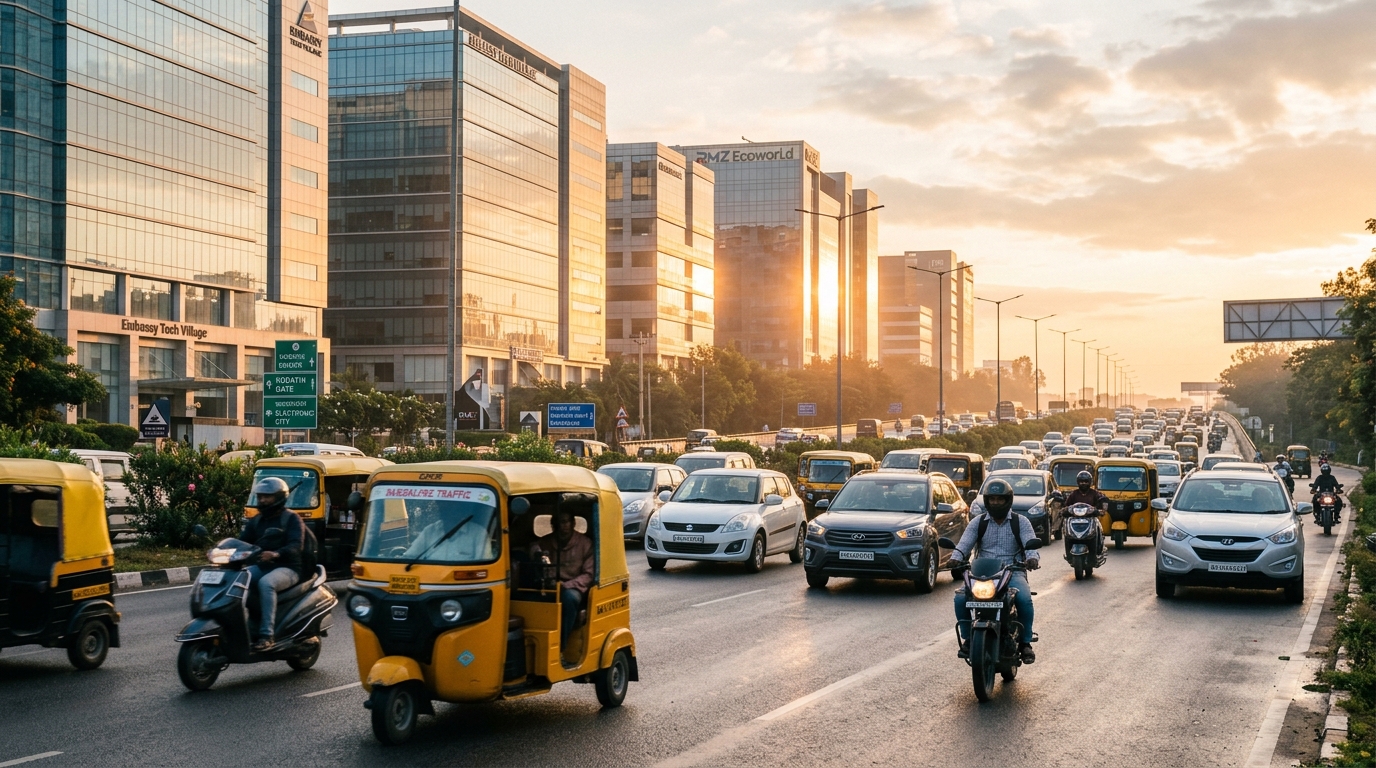
It's 8:47 AM on Outer Ring Road. Traffic hasn't moved in eleven minutes. Somewhere in that gridlock is someone who left home without eating again - because there wasn't time, because the kitchen had nothing ready, because a 9 AM standup doesn't wait for anyone to finish a plate of poha.
This isn't a one-off morning. For a huge share of Bangalore's working population, it's every morning.
The math of a rushed city
Bangalore runs on some of the longest commute times in urban India, layered on top of a tech and startup culture that starts early and rarely slows down. When you compress "wake up, get ready, commute, be at your desk" into a shrinking window, breakfast is usually the first thing to go. It's the only part of the morning that feels optional, until it isn't.
"Skipping breakfast isn't a neutral choice. The body has gone 10–12 hours without food overnight, and that first meal is what resets blood sugar, kickstarts metabolism, and fuels the first few hours of decision-making."
Miss it, and most people don't just feel "a bit hungry" - they feel foggy, irritable, and prone to reaching for whatever's closest by 11 AM, which in most Bangalore offices means vending machine chips or the fourth cup of coffee.
It's not laziness - it's a systems problem
Here's what usually gets missed in the "just wake up earlier" advice: the problem isn't willpower, it's logistics. A nutritious breakfast in India typically means either cooking something from scratch (upma, poha, idli, sprouted moong, soaked oats - all of which take real prep time) or compromising on a bakery item that's mostly refined flour and sugar. There's rarely a fast option that's also a genuinely healthy one.
So the city has defaulted to two extremes: skip the meal entirely, or eat something quick that does very little for you nutritionally. Neither is a real solution - they're just the paths of least resistance in a city that hasn't built a third option.
What a missed breakfast actually costs
The effects show up in small, deniable ways that are easy to write off individually but add up over weeks:
- Afternoon energy crashes: Running on empty until lunch, then overeating to compensate, creates a blood sugar spike-and-crash cycle that leaves you sluggish by 3 PM.
- Worse focus in the exact hours that matter most: Morning meetings, code reviews, client calls - all happening while your body is running on fumes.
- A slow drift toward poor eating patterns: Skipped breakfasts often lead to bigger, less controlled lunches and late-night eating, which is harder on digestion and sleep.
- Compounding stress: Hunger itself is a physical stressor. Add it to a commute and a packed calendar, and irritability isn't a personality trait - it's biology.
None of this is really about breakfast in isolation. It's about what happens to a city full of people whose first decision of the day is made under time pressure, and how that one decision shapes the next eight hours.
Kinnow Impact in Bengaluru
Solving the morning logistics problem across 2km hyperlocal micro-kitchens.
Building the third option
This is precisely the gap Kinnow was built to close. We're a health-first food delivery platform born in Bengaluru, built around a simple observation: people in this city aren't choosing to eat badly - they're choosing the only fast option available, and it's usually not a healthy one.
Kinnow runs a subscription model for fresh, nutritious breakfasts, alongside 100+ meals and drinks available all day for when hunger hits outside the morning window. Everything is backed by a 20-minute freshness promise - not a marketing line, but a function of how we're built: we run our own kitchens, our own delivery fleet, and our own technology stack end-to-end, so there's no third-party handoff diluting quality or slowing things down between the kitchen and your door.
The idea isn't to add another app to your phone. It's to remove the decision entirely. A Kinnow subscription means breakfast is already handled before you've thought about it - real food, not compromises, arriving in the time it takes to get through the ORR crawl on a good day.
In eight months of operating in just 5% of Bangalore, over 41,000 people have installed the app organically, and more than 15,000 are on the waitlist for areas we haven't reached yet - which tells us this isn't a niche problem. It's the city's problem, and it's bigger than any one neighborhood.
The real fix isn't "wake up earlier"
Bangalore's mornings aren't going to get less rushed. Traffic isn't easing, and standups aren't moving to 11 AM. The fix has to meet people where the actual constraint is - time - rather than asking them to manufacture more of it.
That's what a genuinely fast, genuinely nutritious breakfast option does. It doesn't ask you to change your morning. It just makes sure the one thing your body actually needs gets there anyway.
Because at the end of the day, real health isn't something you have to plan for a week in advance. It should be a daily choice you can make in the two minutes before you walk out the door - with real nutrition, made fresh, and delivered fast. That's the whole idea behind Kinnow.